
All-or-Nothing Thinking and Weight Loss: Why Perfection Keeps You Stuck

You planned to walk for 30 minutes.
You walked for 12.
And somehow your brain decided that barely counted.
You planned to order the grilled chicken and vegetables.
You ordered the burger instead.
Now dinner is “bad.”
You filled in your habit tracker Monday through Thursday.
Friday got chaotic.
One box stays empty.
By Saturday, the tracker is living facedown underneath a pile of mail because apparently we no longer speak of it.
This is all-or-nothing thinking.
And it is incredibly good at turning a small deviation into a complete stop.
The problem is not that you had one imperfect meal.
The problem is what your brain makes that meal mean.
“I blew it.”
“I’m off track.”
“I have no discipline.”
“I’ll start again Monday.”
That interpretation has much more power over your next decision than the burger ever did.
All-or-Nothing Thinking Turns a Spectrum Into Two Boxes
All-or-nothing thinking is also called dichotomous or black-and-white thinking.
It removes the middle.
Your eating is good or bad.
Your workout happened or did not count.
You followed the plan or failed.
You were consistent or inconsistent.
The day was successful or ruined.
There is no 60%.
No “good enough.”
No change of plans.
No room for being a human person who sometimes oversleeps, forgets lunch, gets invited to dinner, has a sick child, travels, gets tired, changes her mind, or wants the nachos.
That is a difficult standard to live under.
It is also a difficult standard to sustain.
Research on eating-specific dichotomous thinking has linked this black-and-white style with rigid dietary control and weight regain, although much of the research is observational rather than proof that the thinking style directly causes regain.[1,2]
A 2026 review of perfectionism among people with overweight or obesity found no consistent direct relationship between perfectionism and BMI. What showed up more clearly was an association between some perfectionistic traits, especially concern over mistakes, and disordered eating behaviors.[3]
That distinction matters.
I do not want to tell you perfectionism is “why” you weigh what you weigh.
I do want you noticing whether perfectionism keeps interfering with the behaviors you are trying to repeat.
The Imperfect Moment Is Usually Small
This is what makes the pattern so sneaky.
Most “falling off” moments are not dramatic.
You did not wake up and announce:
“Today I shall destroy every health habit I have built.”
Something changed.
You got busy.
Lunch ran late.
You were hungrier than expected.
You forgot what you planned to bring.
The weekend had less structure.
You ate something you had not planned.
You missed the workout.
Then your brain gave the moment a giant meaning.
In my work, I see the same sequence again and again:
Plan → Something changes → Imperfect choice → “I blew it” → Give up → Start over
The imperfect choice is one moment.
The all-or-nothing interpretation expands it.
Perfectionism Makes 85% Look Like Failure
Imagine you followed through on most of the habits you wanted this week.
You walked three days.
You packed lunch four days.
You ate breakfast instead of skipping it.
You drank more water.
You went to bed earlier twice.
Then Thursday night you ate more dessert than you meant to.
What does your brain review on Friday morning?
Dessert.
Not the walks.
Not the packed lunches.
Not breakfast.
Not water.
Dessert.
This is something I talked about in one of my earlier podcast episodes because I saw it constantly in coaching.
Women would describe a terrible week.
Then we would actually review the week.
It was not terrible.
It was mostly solid, plus a few things that did not go according to plan.
But perfectionism had edited the highlight reel.
It kept only the mistakes.
When you review your life that way every week, of course you start believing you are failing.
Your Plan Needs More Than “Best”
This is why I teach Good, Better, Best.
Let’s say your Best breakfast is an omelet with vegetables and a protein-rich side.
Lovely.
Then Tuesday morning happens.
You oversleep.
Someone needs something.
You have six minutes.
If your only acceptable option is Best, the plan has failed.
Instead, ask:
What is Better?
Maybe it is two hard-boiled eggs and coffee.
What is Good?
Maybe it is a convenient breakfast you keep available because you know mornings sometimes go sideways.
Good does not mean unhealthy.
Better does not mean mediocre.
Best does not mean morally superior.
These are simply different versions of a supportive choice for different circumstances.
The question becomes:
“What works today?”
instead of:
“Can I perform the ideal version?”
That little change gives you somewhere to go when life does not cooperate.

Good, Better, Best Works in the Other Direction Too
The framework is also useful when you are choosing something purely because you enjoy it.
Maybe you are going out for burgers.
The burger is allowed.
You do not need to call it bad.
Maybe Good is the burger exactly as you want it.
Maybe Better means adding vegetables or choosing a side that feels more satisfying for you.
Maybe Best, for that specific meal and your specific goal, looks different again.
Or maybe Good is exactly where you stay because you want the burger and fries tonight.
Fine.
The point is that you are deciding.
You are not turning one food into a moral event.
Food does not need to be pure enough to prove you are doing weight loss correctly.
Rigid Rules Create Fragile Plans
Perfectionism loves rigid rules because rigid rules feel clear.
Never eat this.
Always do that.
Workout must be 45 minutes.
No dessert.
No restaurant food.
Ten thousand steps or the day does not count.
The appeal makes sense.
Clear rules reduce uncertainty.
But rigid systems have an obvious weakness.
Life changes.
Research has long distinguished between rigid and flexible forms of dietary control. Some studies associate rigid control with more disinhibited eating, cravings, or poorer weight-control outcomes, while flexible approaches have shown more favorable associations.[4,5]
That does not mean “flexible” means having no structure.
Structure is useful.
The difference is whether the structure bends.
A flexible plan says:
“This is what I usually do. If the situation changes, I have another supportive option.”
A rigid plan says:
“This is what I must do. If I cannot do it, everything is off.”
Which one sounds more useful on a Thursday where nothing went according to plan?
Stop Calling Food Good and Bad
Good, Better, Best works because it separates food choice from moral judgment.
A cookie is not a character assessment.
A salad does not confer virtue.
Nachos do not know what you promised yourself Monday morning.
Food has nutritional characteristics.
Some foods support certain goals more easily than others.
You are still allowed to care about nutrition.
But once you move from:
“This choice supports my goal more”
to:
“I am good because I ate this”
and:
“I am bad because I ate that,”
you have turned lunch into a referendum on your worth.
That makes food emotionally heavier than it needs to be.
I want food to become less dramatic.
Choose.
Eat.
Learn.
Continue.
“I Fell Off” Is Usually Missing a Middle Step
Another phrase I hear constantly is:
“I fell off.”
Off what?
There is no health wagon rolling through town waiting for you to climb back onto it.
Usually, what happened is something changed and your original plan stopped fitting the moment.
Then there was no backup.
You did something familiar.
And because that action did not match the ideal plan, you called the whole thing failure.
In Episode 134, I described this as a gap.
Your plan worked.
Life changed.
Then:
“Now what?”
No answer.
That is often the moment where consistency breaks.
Not because you lack discipline.
Because the plan needed another option.
Give Yourself a Safety Net
A safety net is a pre-decided response for a predictable problem.
If your Best plan stops fitting, what happens next?
For example:
“When work runs through lunch, I use the food I keep in my desk.”
“When I miss my full workout, I walk for ten minutes.”
“When dinner does not go as planned, I choose one of my three reliable backup meals.”
“When I have dessert I did not plan, I continue with my normal routine afterward.”
“When I miss a habit on my tracker, I record what happened instead of abandoning the tracker.”
Notice what is missing.
Punishment.
Drama.
A new Monday.
A stricter plan.
The safety net keeps an imperfect moment small.
Your Habit Tracker Is Not a Report Card
This is one of my favorite examples of perfectionism hiding inside something meant to help us.
You download a cute habit tracker.
Monday: check.
Tuesday: check.
Wednesday: check.
Thursday: X.
Friday: X.
And by Saturday the paper is accusing you from the refrigerator.
So you stop looking at it.
That is not useful tracking.
A tracker should give you information.
It should remind you what you are practicing.
It should help you notice patterns.
It should show you progress you might otherwise ignore.
It should never become proof that you are failing at being a person.
Research supports self-monitoring as a useful component of behavioral weight-management programs.[6,7]
But there is another side.
A systematic review of people’s experiences with self-monitoring found that interpretation matters. Self-monitoring affected emotions and self-perception, and feelings of shame were linked with abandoning efforts.[8]
That makes perfect sense to me.
If the tool makes you feel terrible every time you use it, eventually you stop using the tool.

Track Data, Not Your Worth
Try treating your tracker like a scientist treats data.
You planned a walk.
You did not walk.
That is not:
“I failed.”
The data are:
“I planned to walk at 6 a.m. I woke up late. The plan no longer fit.”
Useful.
Now ask:
“What would help if this happens again?”
Maybe your backup is ten minutes at lunch.
Maybe your walking shoes go in your car.
Maybe 6 a.m. is simply not a realistic plan for your current season.
The tracker helped you learn something.
That is progress too.
Stop Making Every Tracker Box Pass or Fail
There is nothing inherently wrong with checkmarks and Xs.
If they work for you, wonderful.
But if every X feels like failure, change the system.
You might track ranges.
Instead of:
10,000 steps = success
9,999 steps = failure
try:
Green = full goal
Blue = solid progress
Yellow = minimum version
Or track percentage complete.
Maybe the goal was eight glasses of water and you drank six.
That is not zero.
Your tracker should reflect reality.
If you completed 75% of the habit, the visual should not tell your brain you accomplished nothing.
This is one reason the tracker I use gives you a way to refocus instead of simply collecting perfect boxes.
A Missed Habit Is Useful Information
Suppose your tracker shows the same pattern for three weeks.
Monday through Thursday looks good.
Friday falls apart.
Interesting.
We do not need:
“Why am I terrible on Fridays?”
We need:
“What changes Friday?”
Maybe work ends later.
Maybe you are more tired.
Maybe you meet friends.
Maybe groceries are low.
Maybe your normal weekday structure disappears.
Now you know where to build support.
The tracker did its job.
It showed you where the plan needs attention.
Progress Needs to Be Visible Too
Our brains are excellent at noticing what went wrong.
So help yourself see what went right.
Mark the walk.
Mark the water.
Mark the meal you planned.
Mark the five-minute version.
Mark the moment you stopped halfway through an old pattern.
Mark the day you missed the habit but came back the next day.
Mark the moment you used Good instead of abandoning everything because Best was unavailable.
This does not mean pretending mistakes did not happen.
It means making your progress visible enough that one mistake is not the only thing you remember.
Self-Compassion Does Not Mean Lowering Every Standard
Sometimes women hear compassion and think:
“So I’m supposed to stop caring?”
No.
You still get to have goals.
You still get to change your behavior.
You still get to decide a choice did not work well for you.
Compassion changes what happens next.
Instead of:
“I cannot believe I did that.”
try:
“That was not the choice I planned. What happened?”
Research involving dietary lapses has found greater self-compassion after a setback is associated with less negative emotional reaction, stronger perceived control, and greater confidence or intention to continue pursuing the goal.[9,10]
It did not magically erase the lapse.
It supported a better response afterward.
That is exactly what we need.
Replace “Perfect or Failed” With Three Questions
The next time your plan changes, ask:
1. What was my Best plan?
Name the ideal version.
2. What is Better right now?
Find a simpler version that still supports you.
3. What is Good enough for this moment?
Choose the smallest option you are willing to count.
Then continue.
This works for food.
Movement.
Sleep.
Hydration.
Planning.
Mindset.
The middle matters.
What to Do After an Imperfect Meal
Keep this incredibly boring.
You ate something you did not plan.
Fine.
Do not skip the next meal.
Do not punish yourself through exercise.
Do not declare today ruined.
Do not rewrite your entire food plan.
At the next opportunity, choose again.
Maybe the next meal is your normal meal.
Maybe you drink water because you are thirsty.
Maybe you take your planned walk.
Maybe you go to bed on time.
You do not need to compensate.
You need to continue.
If this pattern is familiar, read Why You Keep Starting Over With Weight Loss, and How to Stop:
https://www.sugarfreemd.com/blog/stop-starting-over-with-weight-loss
Practice Consistency in the Wild
Perfect plans usually look amazing in captivity.
The kitchen is stocked.
You slept well.
The calendar cooperated.
Nothing unexpected happened.
Then we release the plan into the wild.
Work runs late.
Travel happens.
You forget lunch.
Someone invites you out.
Your child needs something.
Energy drops.
This is where the real skill starts.
Your goal is not to build a health routine that survives because nothing changes.
Your goal is to build one that has options when something does.
Good.
Better.
Best.
Normal plan.
Backup plan.
Try again at the next opportunity.
That is what flexibility looks like.

Your Five-Minute All-or-Nothing Reset
Pick one habit you are working on.
Now write down:
Best
What does the ideal version look like?
Better
What is the simpler version for a busy day?
Good
What is the minimum version you are willing to count?
Then answer:
What usually makes me quit?
Name one predictable disruption.
What will I do when it happens?
Give yourself a specific next step.
How will I record partial progress?
Choose a tracking method that shows more information than yes or no.
That is enough.
You are building a plan with a middle.
Frequently Asked Questions
Why do I have all-or-nothing thinking about food?
Black-and-white rules often feel simpler because they remove uncertainty. Past dieting experiences can also reinforce ideas such as “on plan” versus “off plan.” The problem appears when one imperfect choice becomes a reason to abandon the rest of your supportive behaviors.
Does perfectionism make weight loss harder?
Perfectionism itself has not been consistently linked with higher body weight. A 2026 review found more consistent links between certain perfectionistic traits, such as concern over mistakes, and disordered eating behaviors. In practice, perfectionism also becomes a problem when your standard is so rigid that normal deviations trigger quitting.
How do I stop seeing foods as good or bad?
Describe the choice rather than assigning morality to it. Ask whether a food supports what you want in that moment and whether there is a Good, Better, or Best option available. You do not become a better or worse person based on one meal.
Should I track habits if trackers make me feel guilty?
Change the way you track. Self-monitoring is useful for many people, but the tool needs to function as information rather than judgment. Consider ranges, percentages, colors, or a reflection field instead of a simple pass/fail system.
What should I do after I miss a day on my habit tracker?
Record what happened, ask what got in the way, and continue tracking the next day. One missed habit is information. It does not erase the habits completed earlier in the week.
Is flexible eating the same as eating whatever I want?
No. Flexibility still includes intention and structure. The difference is having several supportive options instead of one rigid version that must be followed perfectly.
References
- Palascha A, van Kleef E, van Trijp HCM. How does thinking in Black and White terms relate to eating behavior and weight regain? Journal of Health Psychology. 2015;20(5):638-648.
https://pubmed.ncbi.nlm.nih.gov/25903250/ - Marshall C, et al. Weight Loss After Weight-Loss Surgery: The Mediating Role of Dichotomous Thinking. Obesity Surgery. 2024;34(5):1523-1527.
https://pubmed.ncbi.nlm.nih.gov/38443570/ - Perfectionism in Overweight and Obesity: A Scoping Review. Obesity Reviews. 2026.
https://pubmed.ncbi.nlm.nih.gov/42163652/ - Westenhoefer J, Stunkard AJ, Pudel V. Validation of the flexible and rigid control dimensions of dietary restraint. International Journal of Eating Disorders. 1999;26(1):53-64.
https://pubmed.ncbi.nlm.nih.gov/10349584/ - Meule A, Westenhöfer J, Kübler A. Food cravings mediate the relationship between rigid, but not flexible control of eating behavior and dieting success. Appetite. 2011;57(3):582-584.
https://pubmed.ncbi.nlm.nih.gov/21824503/ - Patel ML, Wakayama LN, Bennett GG. Self-Monitoring via Digital Health in Weight Loss Interventions: A Systematic Review Among Adults with Overweight or Obesity. Obesity. 2021;29(3):478-499.
https://pubmed.ncbi.nlm.nih.gov/33624440/ - Raber M, Liao Y, Rara A, et al. A systematic review of the use of dietary self-monitoring in behavioural weight loss interventions: delivery, intensity and effectiveness. Public Health Nutrition. 2021;24(17):5885-5913.
https://pubmed.ncbi.nlm.nih.gov/34412727/ - Hartmann-Boyce J, et al. Experiences of Self-Monitoring in Self-Directed Weight Loss and Weight Loss Maintenance: Systematic Review of Qualitative Studies. Qualitative Health Research. 2019;29(1):124-134.
https://pubmed.ncbi.nlm.nih.gov/29984630/ - Thøgersen-Ntoumani C, Dodos LA, Stenling A, Ntoumanis N. Does self-compassion help to deal with dietary lapses among overweight and obese adults who pursue weight-loss goals? British Journal of Health Psychology. 2021;26(3):767-788.
https://pubmed.ncbi.nlm.nih.gov/33368932/ - Frayn M, Livshits S, Knäuper B. The role of self-compassion and its individual components in adaptive responses to dietary lapses. Appetite. 2023;190:107009.
https://pubmed.ncbi.nlm.nih.gov/37619622/
Want to Listen Instead?
Listen to Episode 82 of Weight Loss Made Simple, Habit Trackers That Don’t Shame You: How to Actually Feel Good About Progress:
https://weightlossmadesimple.buzzsprout.com/2259978/episodes/17091774-82-habit-trackers-that-don-t-shame-you-how-to-actually-feel-good-about-progress
Give Yourself a Way to See Progress Without Requiring Perfection
If one empty box on a tracker makes you want to throw away the whole tracker, we need a better tracker.
I made the free SugarFreeMD Reset & Refocus Habit Tracker for exactly this reason.
It helps you see the actions you are taking, notice where life gets in the way, and refocus without turning an imperfect day into another restart.
Your goal is not to collect a perfect row of boxes.
Your goal is to keep participating.
Get the free Reset & Refocus Habit Tracker:
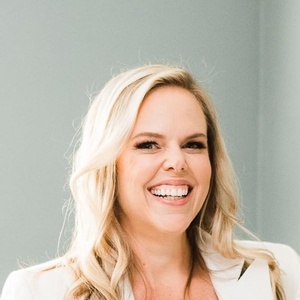
Dr. Stacy Heimburger
Author
I'm a doctor and an advanced certified life and weight loss coach. I am board certified in internal medicine as well as lifestyle medicine and have additional training in anti-aging medicine. I'm passionate about helping women over 40 use a holistic approach to lose weight for the last time.
